Which food contains the most energy?
Your baby needs good amounts of energy, especially in their growth stages. Simply put, energy density is the number of calories (energy) in a specific

Your baby needs good amounts of energy, especially in their growth stages. Simply put, energy density is the number of calories (energy) in a specific

Protein plays an essential role in many bodily functions, including building up muscles and other tissues, and recovery and repair of tissues in the muscles,

Your child will need more calcium as they grow to support their growing bones. One to three-year-olds needs 500 to 800 mg of calcium per

Vitamin A is present in food items which are rich in beta-carotene. This beta-carotene gets converted in the body into retinol, a type of Vitamin

A steady supply of vitamins and minerals from the diet is necessary for optimal growth and function. For your toddler’s supply of micronutrients, it is
A poor diet is likely to have long-term effects on your child’s health. Bad meal practices like picky eating, junk eating, using screens during meals,

– Children naturally have low attention spans, and they usually like playing more than eating. – Hence, instead of focusing on what your child eats

Macro and micronutrients make up all of the nutrients in our diet. Your baby needs these nutrients as much as you do. Macronutrients include carbohydrates,

The following are some potential feeding-related indicators that should be discussed with your pediatrician: – Underfeeding: If your baby is breastfed, they will stop eating

– Persistent high-grade fever– Breathing problems or a runny nose– Eye discharge, watery, red, or swollen eyes– Mouth breathing is common, especially at night, when

Up to 6 months of age, your baby’s complete nutritional needs are fulfilled by breastmilk or formula milk. Start with solids at six months to

As a parent, you should set your nursing time at your convenience while ensuring that your baby is not underfed. Some parents only nurse during

You can begin night-weaning your child (not nursing at night). Gradually substitute night-time sessions with water, back rubs, and other soothing techniques. Sometimes, having a

Food allergies are sometimes wrongly diagnosed as reactions to food-chemicals like colors or preservatives. While some babies may be sensitive to particular food additives, allergies

During the first month, breastfed babies begin to root (reflexively turn toward the breast) or put their fists in their mouth and start sucking, indicating

Instead of thinking of snacks as junk food, see them as an opportunity to include a wide variety of vegetables, fruits, whole grains, dairy, lean

Some toddlers want to nurse most of the time. If that’s the case, remember that they will eventually break the habit naturally. However, if you

Bring your child into the kitchen with you as you prepare meals. Encourage them to smell, touch, and observe different foods. You can even let

Introducing new foods helps your child eat a healthy diet and develop a broad palate. Stick to one new food per day so that they

Make your toddler feel relaxed and included at mealtimes by creating a pleasant, undistracted environment whenever possible. Making separate meals for your little eater can

The best part of traditional weaning is that you do not have to worry about your baby getting enough nutrients from their food. Although the

Making food attractive is the key to developing your child’s interest in food. Here are a few suggestions on how you can make artistic food

Toddlers (one year old and above) should drink about 2 to 3 cups of cow’s milk (the equivalent of about two servings of dairy) each
Vitamin C is antioxidant and vital to maintain overall health. It helps boost your little one’s immune system too. Here are some foods rich in

If your toddler is struggling to make the transition from formula or breast milk to cow’s milk, try serving it mixed. Offer breast milk or

It’s recommended that toddlers consume solid foods before breastfeeding. You can follow some of these ways to ensure that they eat solids and do not

Children don’t learn to chew with a grinding motion until they’re about four years old. Anything you give your child should be mashed with their

It’s important to have your child practice healthy mealtime practices early on. Here are some bad meal practices to avoid as your child is growing:

Long-term breastfeeding has been seen as wrong for a long time, but things seem to be changing. Mothers have talked about what it was like

When babies are offered solid foods or finger foods, they naturally go towards it, try to pick it up, then play with it, and finally

Traditional weaning or any form of weaning should be started around the age of 6 months. Anytime before 6 months is not appropriate to introduce

Here are the indications to determine if your baby is getting enough to eat: Feeding:– Your baby is sleeping well after each breastfeeding or formula

When introducing new food to your baby, always start with offering small quantity to check for any allergies. Foods like eggs, mushrooms, fish or dairy

Every baby is different. Some prefer to nibble more often, while others prefer to drink more at once and wait a long time between feedings.

Here’s a list of items that can be included in the diet of an 8-12 month-old baby is as follows: Fruits: Cooked and pureed dry

When your baby demands feeding, it is important to feed them. However, doctors recommend inculcating a habit of feeding on a schedule. Here are some

Generally, babies eat the right amount by themselves. However, sometimes they may eat more than required. Bottle-fed babies are more likely to overeat because it’s

– Always read food labels carefully. Multi-ingredient baby food blends may be a good option. Keep in mind though, that many of them use the

If your baby is being breastfed exclusively, then feed on demand. There are no maximum counts but a minimum of 6-8 times a day is

– After the first month, your baby is likely to drink 4 ounces of milk every 4 hours (on average). – Their feeding will steadily

– Formula-fed babies, like breastfed babies, may start gently for 2 to 3 days, taking only 1-2 ounces (30-60 ml) at a time. – After

After 12 months (and up to 3 yrs.), only provide 100 percent fruit juice and no more than 4 ounces per day. It should be

Scheduled feedings as indicated by your pediatrician are best for premature babies or babies having any kind of medical issues. For full-term healthy babies, check

That’s right! Breast milk or formula milk is the best source of energy and nourishment during the first year, and it should be your baby’s

Both formula feeding and breastfeeding should be done according to the baby’s demand. Look for early hunger cues in your baby. Do not let your

That’s right! Breast milk or formula milk is the best source of energy and nourishment during the first year, and it should be your baby’s

A deficiency of essential vitamins, nutrients, and minerals in food can lead to various kinds of illnesses for the child, either in childhood or later

As your baby gets older and starts eating more solid foods, they will naturally want less breastmilk or formula milk. Remember not to overfeed the

Your baby does not need water for the first 6 months of life as only breastfeeding or formula-feeding is enough. Milk contains enough water to

Food allergies can be caused by any food, but the following are the most common foods that cause allergies in babies: – Eggs– Peanuts– Soy–

Overfed babies are more likely to develop obesity later in life. Likewise overfeeding leads to several issues such as stomach pain, gas, spit up, or

If your baby isn’t gaining weight after 6 months despite drinking enough milk, see a pediatrician to check their growth chart and rule out any

For the first 6 months, breastmilk or formula should be your child’s ONLY source of nutrition. At 6 months of age, you can gradually introduce

– At 9 months and above, your baby has matured enough to mash solid foods with their gums. Offer your baby a wide variety of

Some babies have severe allergic reactions to milk proteins and some foods. Usually, such cases are quite rare. If you are still concerned about your

– Your baby will need to eat more frequently if you aren’t breastfeeding them. You should supplement their diet with formula along with dairy products

If you’re worried that your child is always hungry, even when they have just had a feed, then don’t worry as this is not a

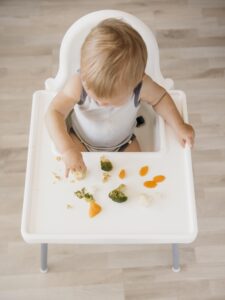
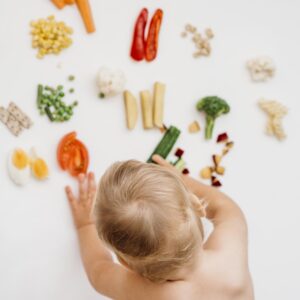
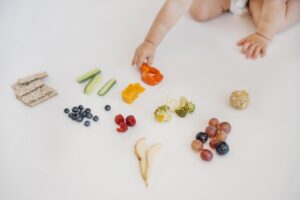
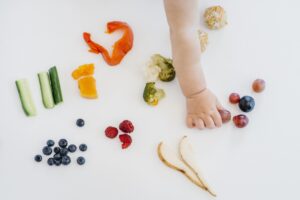
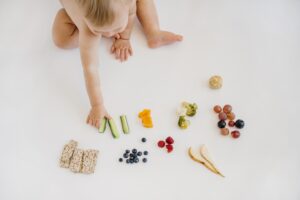
Baby-led weaning is a method of introducing solid foods to your baby by offering them soft bite-sized foods that they pick up, play with, and

By 12 months of age, your baby is able to mash small pieces of food with their gums and whatever teeth that they have grown.

The appropriate age for starting with baby-led weaning is 6 months.do not start with Baby-led weaning any time before that. Some parents feel pressured to

In Baby Led Weaning, most solid foods are acceptable as long as they are steamed/cooked/baked and sliced or cut into bite-sized pieces. However, some foods

Most studies show that baby-led weaning is a great option and has some advantages over traditional weaning aka purees. However, no research states that purees

Several studies show that baby led weaning is a great alternative to traditional weaning. Some of the advantages of Baby-led weaning include – Time-saving and

BLW or Baby-led weaning is a method of introducing solid foods to your baby by offering them soft bite-sized foods that they pick up, play

The biggest fear of parents regarding baby-led weaning is ‘choking’. Most parents think that giving solid foods directly to their babies is not safe. However,

Combining Baby-led weaning and traditional weaning aka purees is a great idea. Especially for parents who are nervous about starting solids directly. One way to

The whole point of baby led weaning is to introduce your baby to the foods from your family pot as soon as possible – from

A sick child can be a sad sight. Ensuring that a sick toddler feeds well is very crucial for the recovery of the child. Some

The biggest fear of parents regarding baby-led weaning is ‘choking’. Most parents think that giving solid foods directly to their babies is not safe. However,

Green beans are a powerhouse of nutrition and offer your baby a wide range of benefits in the form of vitamins A, K, and C

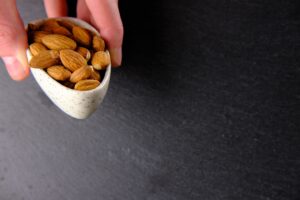
Monounsaturated fats, vitamin E, fiber, phytonutrients, biotin, minerals, and trace minerals – almonds have them all. They aid in the healthy development of your baby

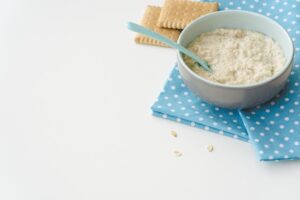
Easy to digest and full of nutrients that aid a baby’s development, oats are an excellent choice as baby food. You can give oats to

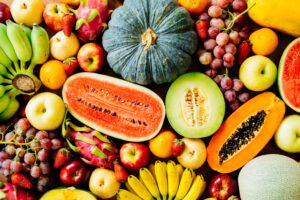
The best way to give your baby the benefits of fruits is to give them fresh, well-washed, and bite-sized or mashed fruits after 6 months

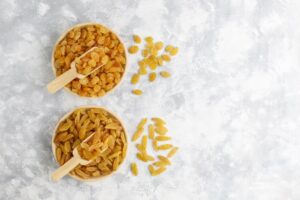
Raisins are a powerhouse of nutrition. In addition to being a natural laxative and low in fats, raisins are rich in iron, vitamins, and minerals.

Just give your baby the saltless, spiceless, and sugarless version of the foods you eat. It makes less mess, consumes no extra time and your

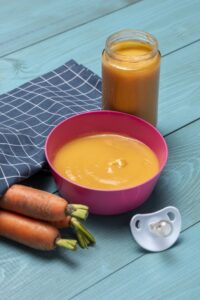
Loaded with vitamins A, E, B6, C, folate, iron, and potassium along with several other nutrients, pumpkin is a great first food for your baby.

Soup with veggies and lentils, chicken broth or other nutritious broths, moong dal khichdi, apple, oatmeal porridge, boiled and mashed veggies, and mashed curd rice.

Honey is a very nutritious food but not for babies. Babies consuming honey under the age of 1 can develop botulism which is a very

– Not all mothers can breastfeed: some will be unable to make enough milk for their baby’s needs, whereas others have a health problem or

Every day, your baby needs 3 meals and 1-2 healthy snacks, as well as on-demand breastfeeding. If they do not breastfeed, then formula should be

As parents, we resort to force-feeding when we have a notion that the child isn’t eating adequately. However, force-feeding will harm your child’s physical, emotional,

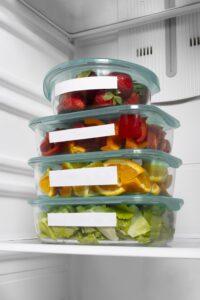
Freezing baby food saves time and also prevents nutrient loss as compared to fresh foods that are not consumed immediately and are left at room

Fresh fruits such as bananas, steamed apples, strawberries, and chicks are good for your baby during diarrhea. Offer foods made of white rice, oatmeal, Dalia,

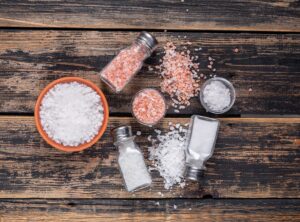
Babies don’t need too much salt or sugar before 1 year. The amount of salt and sugar present in breast milk or formula is sufficient

When you start feeding your baby solid foods, it can be difficult to make sure your child is getting all of the vitamins and minerals

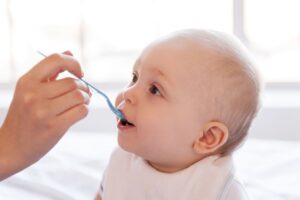
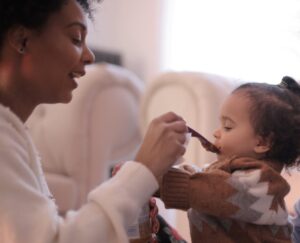
– When your child shows signs of hunger, such as placing their hands in their mouth, feed them. – Start by giving 2-3 spoonfuls of

– It’s important for your baby to become accustomed to the feeding process, which includes sitting up, eating from a spoon, pausing between bites, and
Have an oral rehydration solution on hand at all times. These are available in liquids, popsicles, and powders. While using powders to make an oral

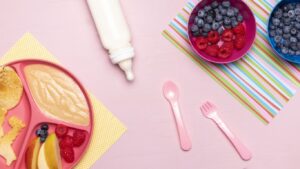
The following are excellent choices as finger foods for 6-9-month-old babies. Sliced banana, sliced strawberry, sliced chikoo, sliced mangoes or melons, breadsticks with smooth peanut

– Do not tap on the anterior fontanelle of the baby. The anterior fontanelle is that part of the head, where the baby doesn’t have

– It encourages parental bonding with the baby from the beginning. – It increases the parent’s attachment to the baby. It helps in understanding the

– Either of the parents can do the massage for the baby. Any other family member can also do it. Avoid appointing an outside person

No, it’s not true. Dairy products don’t cause the body to produce more mucus. Some people say that after a drink of milk, their throat

Steps for infant massage: – Gently stroke the baby’s head, and smoothly massage the baby’s forehead in the horizontal direction with two fingers, starting at

– Infant massage provides tactile stimulation (stimulation with touch) which is part of multisensory stimulation promoting a baby’s development and well-being. – It also benefits

Scheduled feedings, as indicated by your pediatrician, are best for children born prematurely or with medical issues. Check your baby for hunger cues (instead of

When the body reacts to non-toxic proteins contained in meals, it is called a food allergy. These reactions usually occur quickly after a meal has
Cow’s milk is used in milk-based formulations, along with vegetable oils, iron, vitamins, and minerals. Soy-based products have added vegetable oils and minerals and are

.When your child shows signs of hunger, such as placing their hands in their mouth, feed them. Start by giving 2-3 spoonfuls of soft food

That’s right! Breast milk or formula milk is the best source of energy and nourishment during the first year, and it should be your baby’s